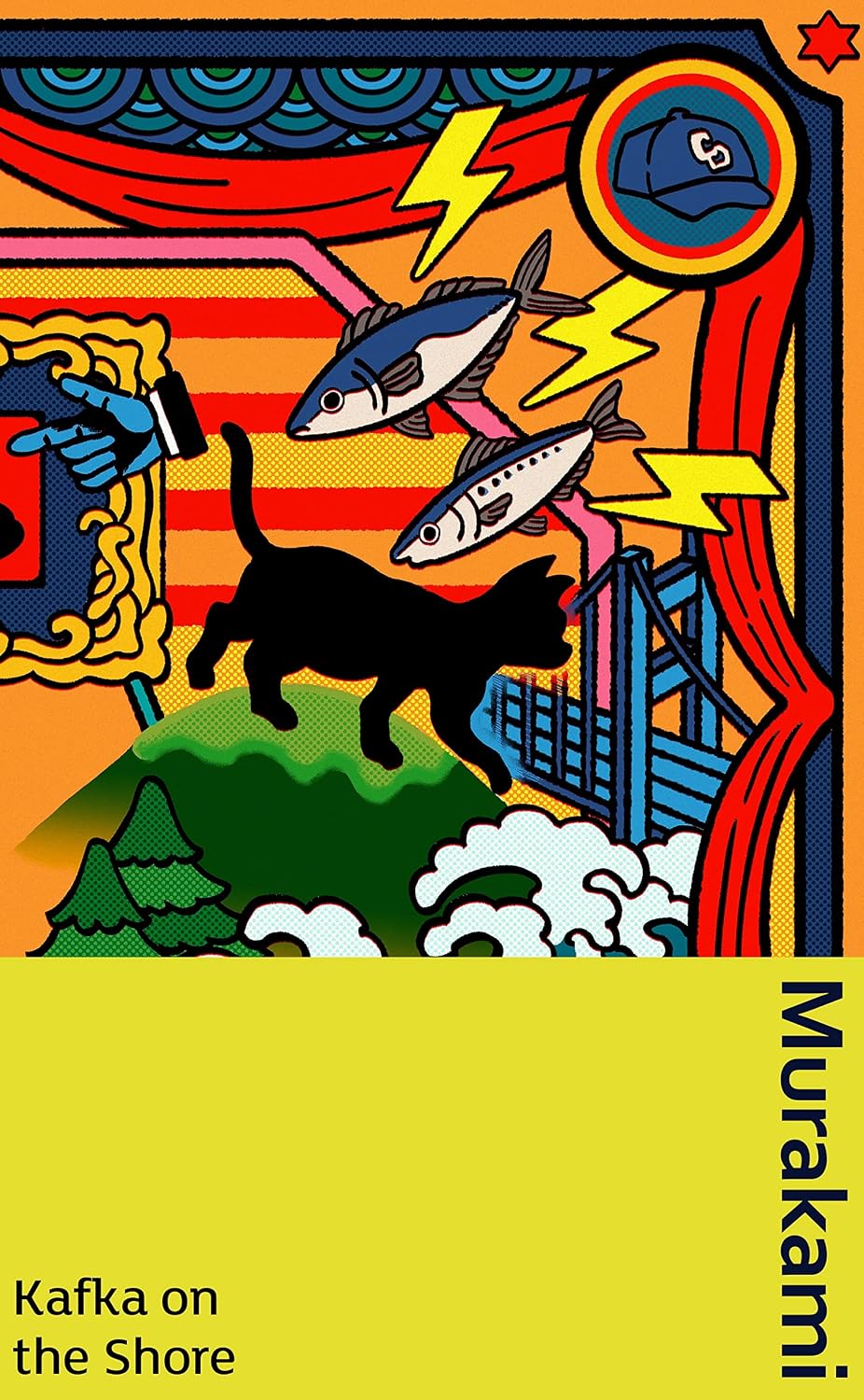
Kafka on the Shore
I bought Kafka on the Shore months before I opened it. A Farcaster post made it look different from anything I’d been reading, and that was enough. At the time I was deep in Mistborn, Dungeon Crawler Carl, and Red Rising. I can’t remember the last modern classic or literary novel I’d actually finished. This felt like a deliberate step sideways.
The book runs two parallel stories that eventually braid together. Kafka Tamura, a fifteen-year-old running from a dark prophecy, and Nakata, an elderly man who talks to cats and carries a strange wartime scar. I preferred Kafka’s chapters from the start. The early Nakata material, especially the long stretch with the teacher and the government interviewers, felt confusing and slow. Even Kafka’s own prophecy is held back so long that I kept wondering whether I’d missed a page. For the first hundred pages or so I was pushing through. Once the rhythm of the alternating chapters settled in, the switching stopped feeling like an interruption and became part of how the book moved. Nakata’s side grew more interesting as his role clarified. Kafka’s side stayed the stronger pull the whole way.
I came in with a background in fantasy, so the talking cats, fish falling from the sky, and entrance stones felt natural inside the story. What threw me was the Oedipal material. It sat oddly next to everything else, and I’m fairly sure a large part of it went over my head. At the time I wondered whether the translation was creating extra awkwardness. It turns out the English version is the standard Philip Gabriel translation and the Oedipal thread is intentional. That knowledge helped, but it didn’t make the thread feel any more integrated for me. What stayed with me was simpler. Kafka keeps refusing the life the world seems to have already written for him. There is a single expected path and he keeps stepping off it. I recognized that feeling. I admire people who do it, and I am trying to do more of it myself. The book doesn’t preach that idea. It just lets Kafka live it in the middle of all the other strangeness.
Kafka on the Shore is a good read I don’t regret. It is also a book that asked me to push through early and left one major thread partially opaque. That combination keeps it from an easy Take My Money for me. It sits at Worth A Try. If you already read a lot of fiction and want something off the usual path, something that uses magical elements without turning into classic fantasy or sci-fi, this is a solid place to land. Just know the first stretch may ask for patience before the rhythm locks in.